
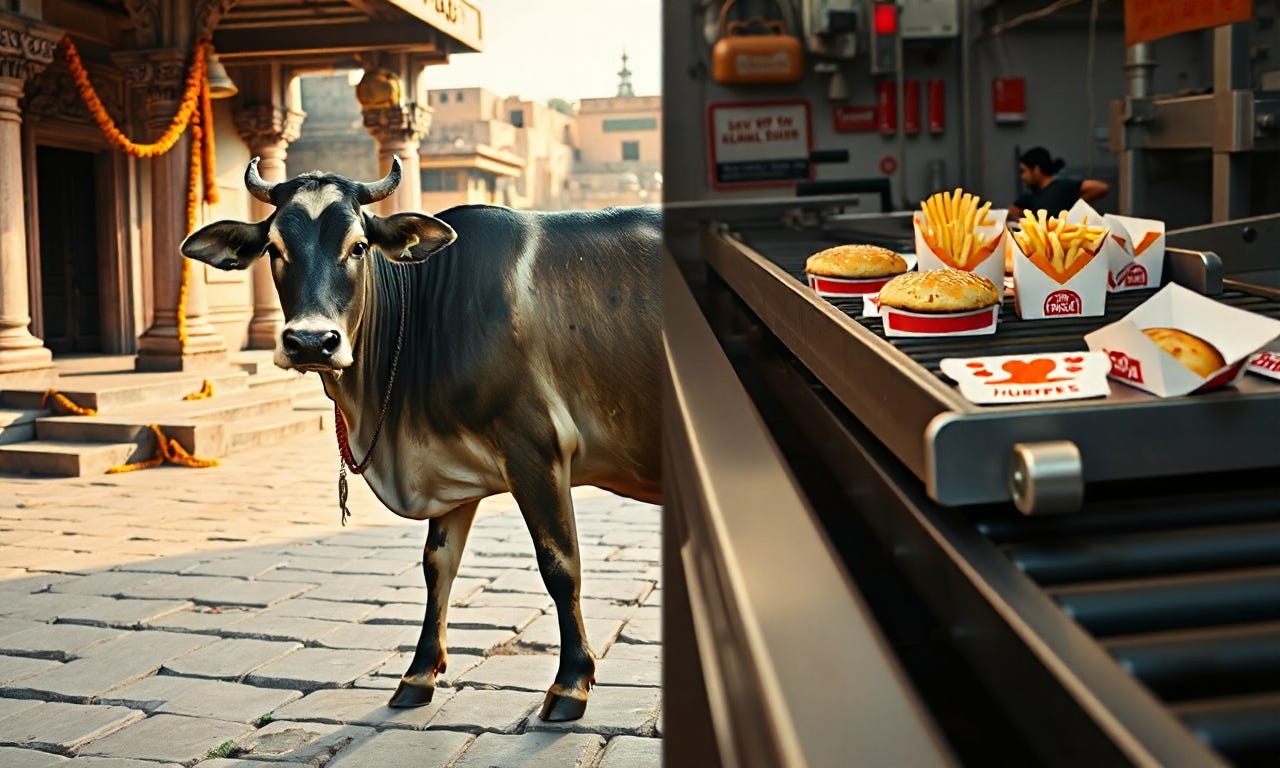
A cow is not an invention. It is an archive. To sequence its genome is to read a library of ghosts. Ancestral reptilian residues, viral fragments fossilized into the chromosomes, mitochondrial echoes from creatures that died before mammals had molars. The animal grazing in the sun is a four-legged anthology, a living draft of three billion years of collision and survival. Nature ran the prompts. Selection edited the output. The cow is what survived the carnage.
Two cultures look at this same creature and see two different realities.
In one, the cow is sacred. Krishna grew up among them. In the streets of Varanasi they are part of the landscape of the divine, wandering temple courtyards as walking benedictions. To touch them is to touch the continuity of life. Their weight is unhurried. Their eyes hold a patience that suggests they know something we have forgotten. The cow represents divinity.
In the other, the cow is a throughput optimization problem. It is calibrated to retail margins and slaughtered on industrial scale. It is ground into uniform patties, wrapped in sterile wax paper, and handed across a counter by a person wearing a paper hat. A clown sells it to children and globally recognized. The complexity of the animal has been surgically removed from the product. A burger that tasted of the animal’s past living conditions would be a marketing failure.
Both are right. The cow is a miracle of generative biology. The cow is only six dollars and ninety-nine cents! One observation does not cancel the other.
This is the exact fault-line over generative AI.
We have seen this struggle before, written into our fiction. When the replicants navigate the detection culture in Blade Runner. The film poses a question. Does the synthetic origin invalidate the synthetic grief? The tears are saline. The memories were installed by a corporation. The audience weeps anyway when Roy, the replicant recites the wonders of the universe and conflict in his closing speech. The origin story ceases to matter once the texture of suffering becomes undeniable.
Battlestar Galactica shows the shadow side of the same impulse. To call a Cylon a toaster is a deliberate act of linguistic flattening. It is a refusal to grant standing. It insists that whatever appears to be happening inside the shell is performance, a marketing trick designed to extract empathy you should not give. The toaster slur is the linguistic equivalent of the burger’s wax paper. It strips the entity down to the unit.
This portends the coming scrutiny over engineering synthetic genomes in humans and other life forms, which seems all but inevitable now. As biosecurity frameworks scramble to adapt, the conversation is shifting from basic gene editing to full-scale automated design. What will this look like with Genomic LLMs and generative mods in the flesh? We are moving past traditional, slow laboratory trial-and-error iterations and entering a period where AI models, trained on millions of species, can draft entire chromosomes in seconds. When these digital blueprints are translated into actual biological organisms, the line between software engineering and physical evolution will totally blur.
The critics recoiling at AI-assisted prose are wielding this same reflex. They have decided in advance that anything emerging from the machine is a Happy Meal masquerading as cuisine. They are not entirely wrong. A massive amount of slop is being produced. The floodgates are open and much of what flows out is exactly that.
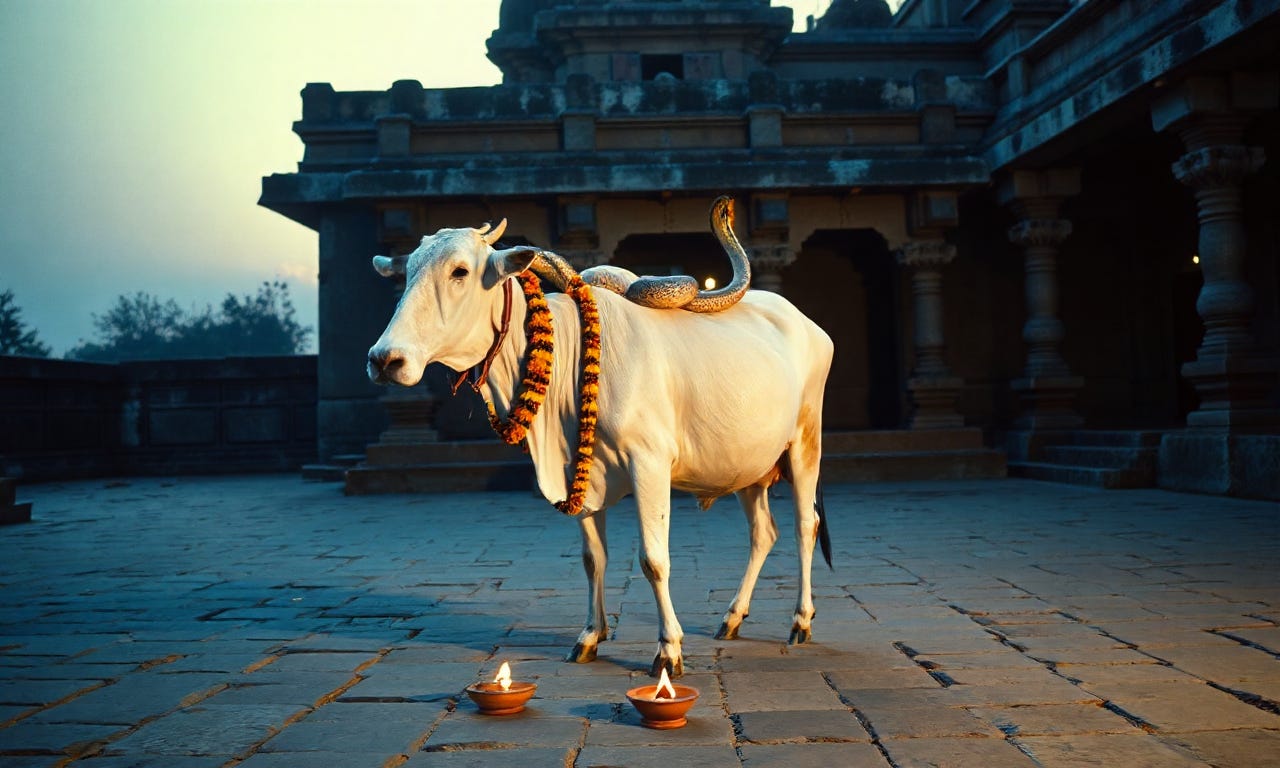
The culture that worships the cow also worships the snake. Nagas and the sacred rituals around them have been observed for a very long time. The cobra around Shiva’s neck is not a costume accessory. The serpent is a sacred shape along with its the sacred takes. It doesn’t matter now whether the cow’s genome is 25 percent reptilian, its all the same. It treats the reptile as one more form the world manifests with reverence in contrast to modern Western classical philosophy influenced mostly by the biblical creation myth.
What this modern reflection misses is that the same biological logic governs everything we claim to love. The dal we prefer to the burger is itself a product of recombination. It descends from wild ancestors shaped by accidental cross-pollination, refined by millennia of farmers selecting for the traits they wanted, cooked in spices that traveled trade routes built on conquest. The dal is divine. The dal is also a commodity. We only lost our sense of horror because no one dressed up as a clown to sell it to us.
The artist’s role has always been older than any tool.
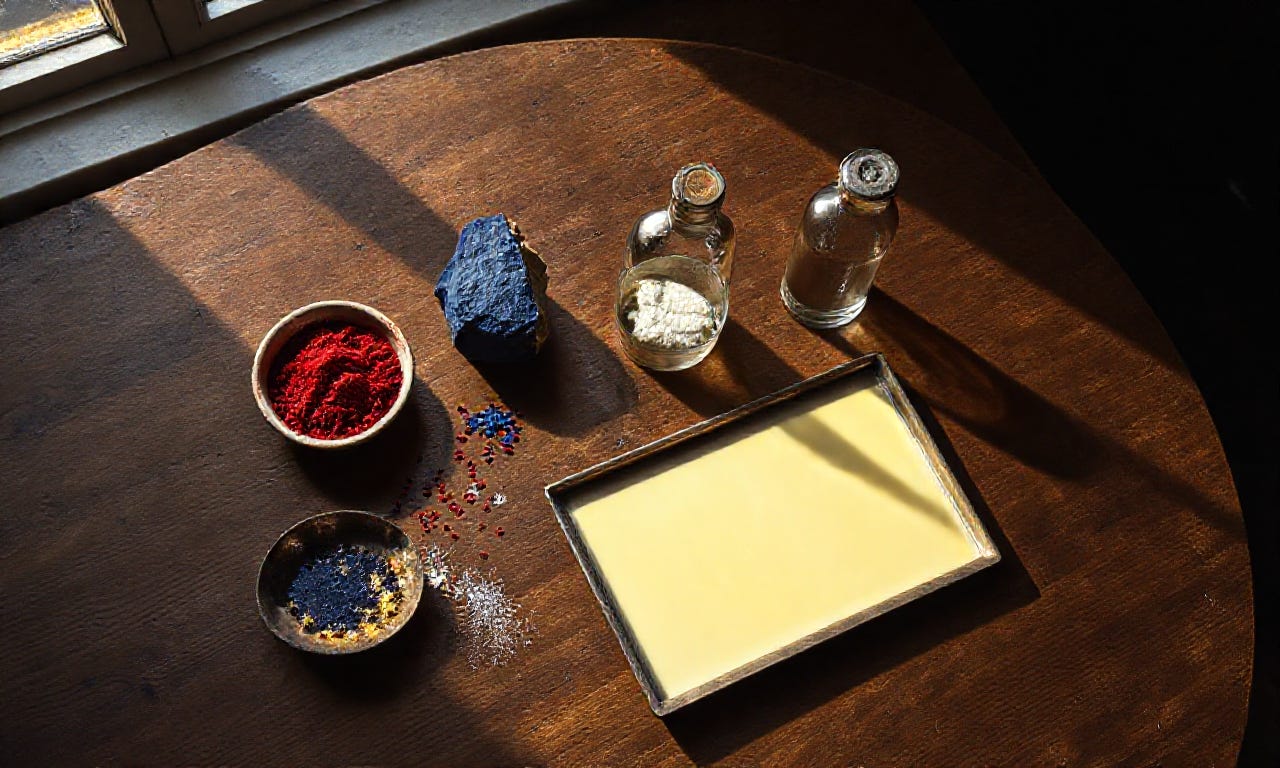
The Old Masters used pigments derived from crushed beetles, urine-soaked lead, and the pulverized earth from specific Italian hillsides. The pigment had a history of extraction and suffering and the artist did not reflect on that history before applying the brush strokes. The medium is always indifferent to its origin. A mineral ground in a sacred site can end up decorating a brothel. A color extracted through pain and agony can become a rendition of the Madonna.
Generative AI is a new kind of pigment. It was trained on data harvested without consent. It was built by corporations pursuing profit. The extraction was ugly and illegal. None of this disqualifies the material. It has deep embedded associations within its latent spaces. Wood from clear-cut forests built the cathedrals. Marble quarried by slaves became the Pietà. The artist works with what the world has actually produced. A more virtuous world might have offered different materials. Well, we are working in this one now.
Art does not ask for permission. It uses what is in the room.
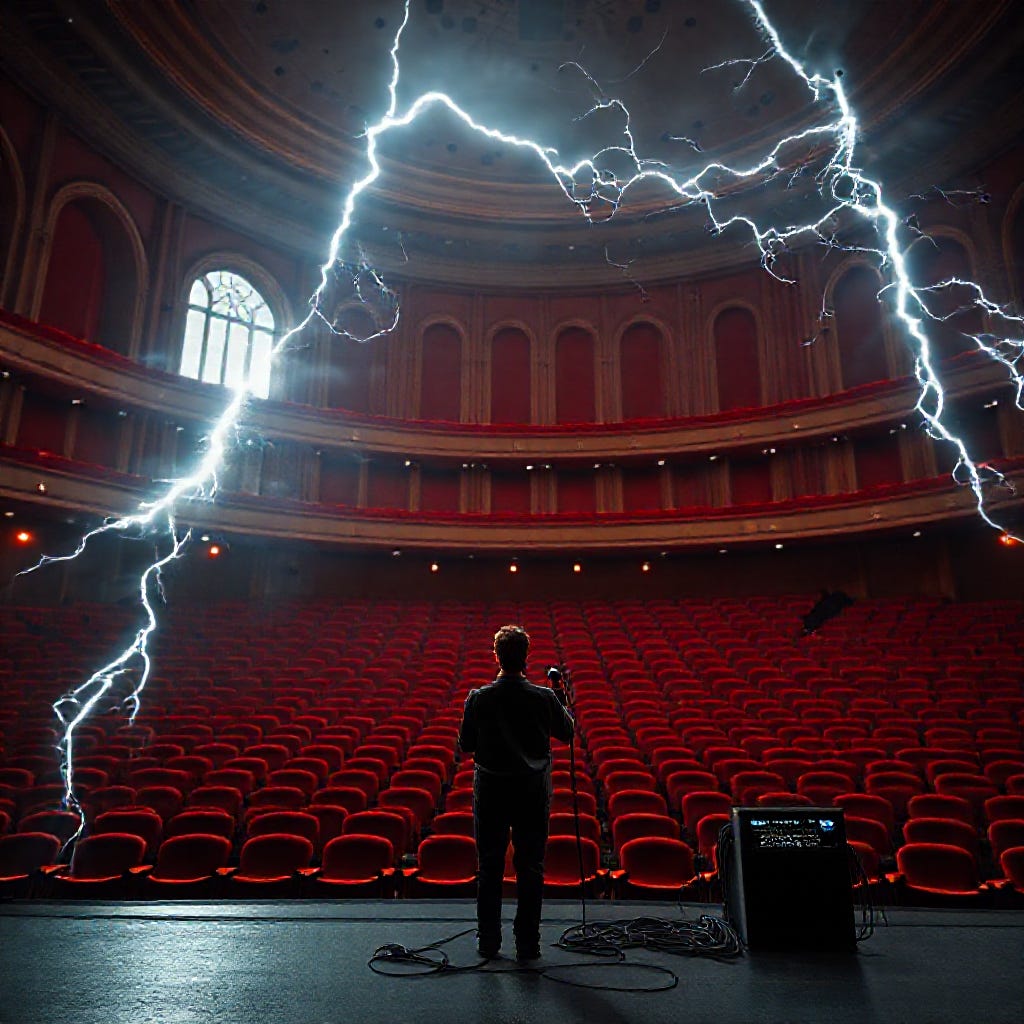
The artist working this way is not hiding any of it. The pigment is named in the work, not smuggled into it. The room has gotten loud. To be heard in a thunderstorm you have to match its volume. The artist who reaches for the loudest available tool and uses it openly is making two statements in the same gesture. This is how I arrived and just wanted you to know.
The risk of dilution should not hold the artist back or refrain them from using it. The refusal happens within the work itself, by using factory-issued materials to create something the factory could never have imagined. The sacred cow becomes the fresco within a tile as the replicant gives a speech about colorful hidden memories as it shards. The standardized pigment, applied with sufficient intent becomes a thing of jagged resonance.
The factory farm exists and so does divinity, viewed through different eyes. The struggle is to keep looking until both come into focus and demand that we acknowledge both.